Deb Conrad, M.A., Prison Education & Apprenticeship Program Director, Western Nevada College
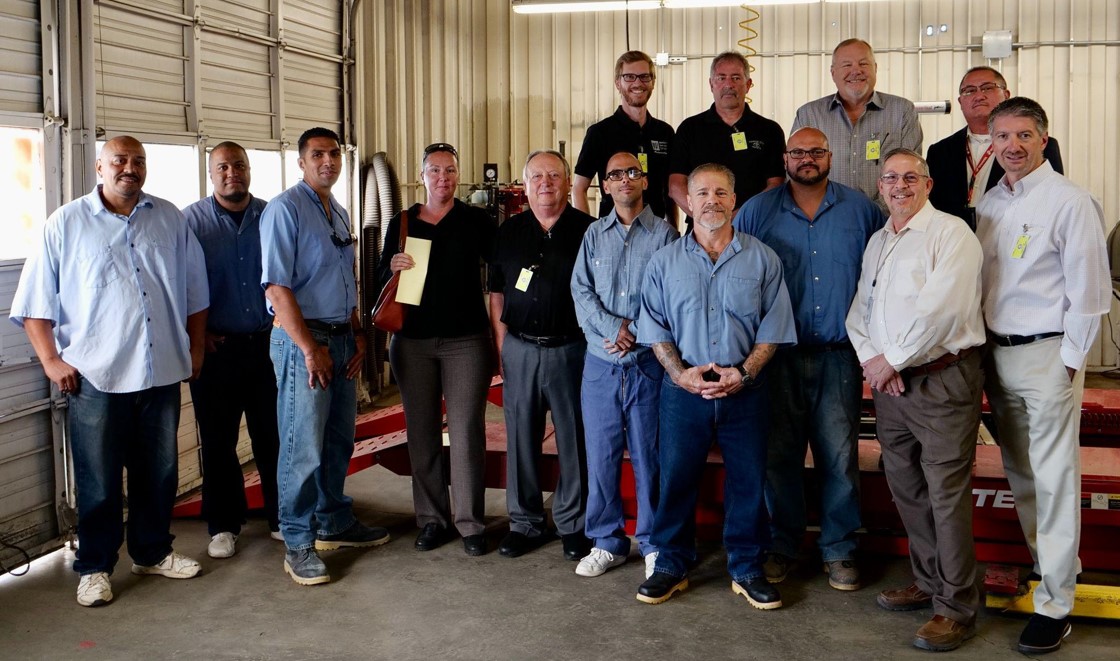
Western Nevada College (WNC) enrolled its first group of students in its Automotive Mechanics Certificate of Achievement program in August 2023 at the Northern Nevada Correctional Center (NNCC) in Carson City, Nev. Although not the first program of its kind in the country, it is an exciting opportunity for men incarcerated at NNCC. The auto bay has been busy with activity as students learn the basics in their AUTO 101, Introduction to General Mechanics class through lectures and hands-on assignments. This is the first of several semesters for these students as they earn Automotive Service Excellence (ASE) certifications and the Certificate of Achievement.
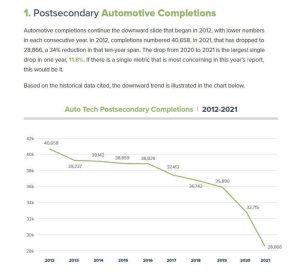
The automotive repair industry is one of many industries facing challenges filling vacant positions. The problem is related to industry growth and the number of employees reaching retirement age and leaving the field. According to the 2022 report, “Technician Supply & Demand,” published by TechForce Foundation, “Over 60,000 new entrant automotive techs [will be] needed between 2022 and 2026.” The same report calls out a massive drop in postsecondary automotive completions that is problematic for employers because fewer prospective employees will have the training employers desire.
It is situations such as these that led Campagni Auto Group in Carson City to reach out to the Nevada Department of Corrections (NDOC) about their interest in interviewing and potentially hiring formerly incarcerated individuals who obtain ASE certifications. Soft skills, such as good communication, active listening, and the ability to work with a diverse group of colleagues, are also necessary to become a valued member of their team after release. Campagni recognized a pool of talent that, if trained while incarcerated, could return to the community ready to help rebuild the workforce at their dealership and others around the state. WNC was invited to join the conversations, which began in 2019, to help define the educational pathway.
There were several factors that made this program possible. NNCC had an existing auto bay with room for three lifts, a tool room, and a plan for ensuring safety and security when tools were checked out and returned every class session. NDOC used funds from the Youthful Offenders Program grant to purchase modern equipment, including a lift rack, alignment machine, wheel balancer, and tire changer. WNC has an existing automotive mechanics degree program on its main campus and several years of experience operating programs inside the prison, so it was not a stretch to imagine bringing the program to NNCC. WNC receives legislatively approved funding from the state, which comes up for renewal every two years, to offer college programs in prison, so funds were available to offer students scholarships, conduct necessary equipment inspections, perform maintenance, and purchase additional tools and supplies for the program. For colleges considering a program like this, WNC had already overcome a number of obstacles which could take time for others to address: available space, equipment, funding, and an existing working relationship with corrections.
Campagni Auto Group’s interest was another key factor and, despite a several year delay due to the COVID-19 pandemic, they persevered as a partner committed to seeing the program come to fruition. Several top members of the company visited the students during a class session to talk with them about opportunities in the industry and to learn more about the students hopes for the future. Prior to completing the program, the same group from Campagni plans to meet with students again to hold mock interviews. This kind of engagement from an employer will contribute to student success. Campagni is poised to set the stage for other employers to consider similar interest in this pool of talent.
“We are anxiously awaiting the chance to interview the first set of graduates who will have earned multiple Automotive Service Excellence certifications and a Certificate of Achievement from WNC before they walk out the door,” Dana Whaley, former general manager for Campagni Auto Group, and a critical member of the team bringing this program to fruition, said. “We’re proud to have been at the forefront of this endeavor.”
To help build the soft skills employers like Campagni seek, students will be enrolled in general education courses like English/Communications, Mathematics, and Human Relations alongside the required automotive courses. The choice to offer the Certificate of Achievement rather than just the ASE certifications was made, in part, with this in mind. The other factor was that WNC is preparing to become an approved Pell-granting institution. Offering the Certificate of Achievement will allow auto students to apply for Pell once the college is approved by the US Department of Education (ED).
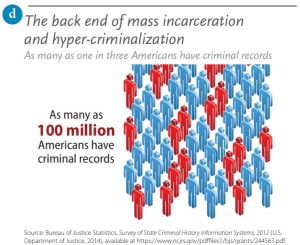
According to the Sentencing Project‘s profile on “Americans with Criminal Records,” the result of mass incarceration is that one in three working adults in this country have a criminal record. To solve staffing shortages, employers may need to follow Campagni’s lead and create a culture more inclusive of formerly incarcerated people.
The transition from prison to life back in the community can be challenging, especially for those with few or no supportive relationships on the outside and little to no money when they step outside the prison gates. Imagine trying to start a new life with housing options that may initially be limited to weekly motels, potentially unreliable modes of transportation, and a knowledge gap around current technology that most of us use with little thought.
To foster the best chance of success, institutions of higher education may need to recognize that a corrections-employer-college partnership is incomplete without including organizations in the community that can provide assistance and address the deficit in essential resources faced by those who have recently returned to the community.
ED calls upon institutions wishing to become approved Prison Education Programs (PEP) that can offer Pell grants to incarcerated students to do so. To become an approved PEP, the application to ED must include:
“Information about the types of services offered to admitted students, including orientation, tutoring, and academic and reentry counseling. If reentry counseling is provided by a community-based organization that has partnered with the eligible prison education program, institution, or correctional facility to provide reentry services, the application also must provide information about the types of services offered by that community-based organization;” (34 CFR 668.238).
This mandate by ED acknowledges the need for student support that goes beyond a single institution and includes the community to provide a supportive network for those preparing for release and those recently released students.
Despite the challenges they may face later after release, WNC’s students are enthusiastic and engaged. There is a waiting list to get into the program. Each week, the students don their protective eyewear, tie on aprons to protect their clothing, and snap on latex gloves to mitigate the grease so they can practice what they’ve learned thus far on an engine pulled from a vehicle. Meanwhile, those of us who launched this program wrestle with the challenges that come with making it a priority to serve this population of students. The support of our partners, the dedication of our instructors, and the opportunity created for all make it not just a worthwhile endeavor but a necessary one.
“Western Nevada College is honored to collaborate with forward-thinking partners like Campagni Auto Group to develop innovative solutions that bridge the employment gap,” said WNC President Dr. Kyle Dalpe, “Our joint efforts are not just about education; they’re about transformation and opportunity, giving incarcerated students the skills they need to succeed and contribute to our community.”