Teresa Sullivan, President Emerita and University Professor Emerita, University of Virginia
This article is adapted from the Presidents’ Day speech at the Southern Association of Colleges and Schools annual meeting, December 9, 2024. Disclaimer: I am not a lawyer, and I am not giving you legal advice. I do have some hard-won experience with some of these issues. And I did consult with a First Amendment specialist about my remarks, but these views are my own.
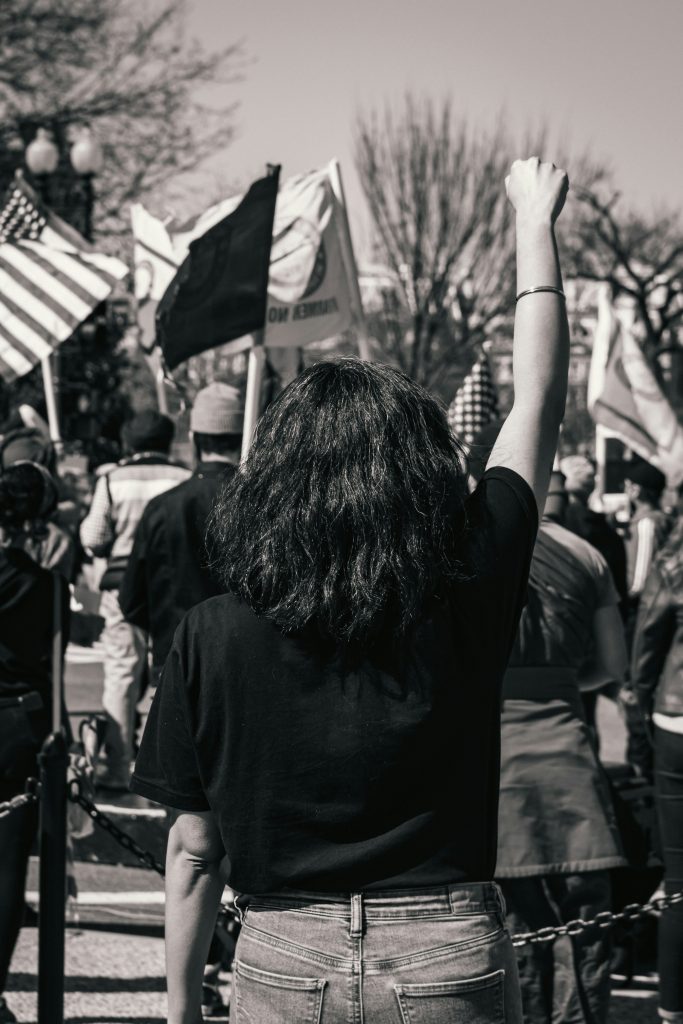
For college leaders 2024 was an annus horribilis. The ostensible issue was whether our campuses are still open for free speech or are suppressing some speech. There had been a steady drumbeat of accusations that universities censored conservative speakers and speech. In the wake of the violent Hamas attack on Israel on October 7, 2023, and the Israeli retaliation, the new charges were that campuses are antisemitic or anti-Palestinian or both. A related charge was that DEI policies and agencies had created special protected classes based on demographic characteristics and therefore treated students unequally.
Americans, especially our young students, are unlikely to understand much about the Israeli/Palestinian conflict. One study conducted by Ron Hasser at the California-Berkeley Law School showed that students chanting “From the river to the sea” could not name the river, could not name the sea, and couldn’t find Israel on a map. Some students are deeply knowledgeable about the conflict, while others are caught up in sloganeering. Why are the slogans so effective? A young and idealistic generation reacts strongly both to the claims of genocide and of racism – regardless of which side they support in the eastern Mediterranean.
Let’s turn now to some practical steps for administrators.
First, start with the law.
The First Amendment protects the rights of Americans to free speech, especially political speech. It protects the right to assemble, including in large groups. The First Amendment and the Fourteenth Amendment protect the right to free association and the right to disassociate. These constitutional amendments are binding on public universities and apply to many private institutions. In some states, legislation or regulations may apply First Amendment free speech rules to private colleges and universities. A commitment to intellectual inquiry has led many private institutions to voluntarily place themselves under the First Amendment.
According to court opinions, universities may specify the time, place, and manner for expressive activities. “Time, place, and manner” allows you to ensure that classes are not interrupted, but not to select a remote, untraveled location for your “place.” When I asked my First Amendment consultant about free speech zones, he said the free speech zone runs from the Atlantic Ocean to the Pacific Ocean. You could create amplified sound zones, so that free speech could happen anywhere, but amplified sound would be restricted to minimize disrupting teaching and research.
Do not require advanced permission for protests or demonstrations, but you may require scheduling for the use of classrooms or outdoor spaces in high demand. You may require advance notice—not permission—for large gatherings that require police protection. But students may turn out spontaneously and in large numbers in response to the latest dramatic development in the news. It would usually be a mistake to try to break up such a gathering or to punish the participants. Public response to events is part of what free speech is about.
If your board operates under a state open meeting act, you probably cannot rule out all protests at board meetings, but you might be able to regulate the manner of the protests to allow only silent protests, such as holding signs or wearing protest t-shirts.
While it is not codified as crisply as time-place-manner, many knowledgeable observers believe that protesters cross a line when they deprive other students of the “place” for a lengthy period of “time.” This problem arose with encampments, some of which lasted many days. Occupations of administration buildings are not protected speech; the university can preserve its property for its intended uses. Occupation of classroom buildings is subject to the same rule, and it deprives other students of the courses for which they paid tuition.
But let’s be honest. Many protesters want their issues to gain publicity, and following the rules is unlikely to produce a live shot on the six o’clock news. An outrageous protest that flouts existing policies is more likely to gain attention, both wanted and unwanted. That brings us to the issue of policy.
Second, rigorously review your current policies.
Policy lets you make important choices within the borders of the law. Time, place, and manner rules must be adapted to each campus, and you have some discretion there. You probably don’t want to ban everything that you could ban; the most restrictive time, place, and manner rules are rarely the best rules. It is important to enforce the rules you do make, and to do so even handedly. But not all violations are equally serious, and not all deserve the same penalty. Tearing down a poster does not carry the same gravity as setting fire to a lab.
In the absence of policy, you will be dangerously adrift and subject to charges that your actions are arbitrary and capricious. When you do write policies, you should distinguish between actions and speech. Violent actions are never acceptable, and that should be non-negotiable. Vandalism, property destruction, arson, and harm to individuals should be prohibited. State clearly what the sanctions might be.
Setting forth what is unacceptable speech is more difficult because context does matter. Nevertheless, we can identify a few bright lines. Threats of harm directed against individuals are not protected speech. This prohibition could extend to threats against entire groups, especially if members of that group could be present. Expressive activity that deprives others of their rights — such as encampments, building takeovers, or the hecklers’ veto of invited speakers – can also be prohibited.
If your policies need to be changed, do so through your usual practices, including consultation with stakeholders and committee reviews. Shortchanging these measures creates suspicion of the administration and its motives. If your governor or legislature is at all inclined to meddle, some activists will declare that policy changes were actually engineered by politicians unless you stick to your normal procedures as much as possible.
Review your policies carefully for ambiguities or inconsistencies. Watch out for vague language that might be interpreted to restrict protected speech even though that was not your intention. Courts can review your policies for what they say and not only for how you implement them. Look for gaps that would let protesters do something harmful that you meant to prohibit, but you didn’t quite say it. Search for old policies that might be lying around somewhere, possibly unused and unreviewed for years. Repeal them or review them carefully for consistency with your new policies. Check whether your central administrative policy is contradicted by a college or department level policy, or by a policy at your remote locations. Schools have encountered big problems when they clearly prohibited something in one policy, but another policy somewhere else appeared to create an unintended exception.
Avoid changing your policies on the fly or when classes are not in session. No matter what interpretation you put on the changes, campus dissidents will create additional issues of administrative unaccountability and lack of transparency. A change enacted in the bright light of a July day will still be described as having been done “in the dark of night.”
Proactively explain the policies, especially new ones but also the ones already on the books. Publish the policies and any changes to them on easily found websites. Invite the student newspaper and the local press to interview you about the policies. Be sure that vice presidents, deans, and department chairs know the policies; send copies to the Faculty Senate and the major standing committees. Explain your policies in orientations to new students – not just first-year students and transfer students, but also (maybe especially) graduate students. Above all, ensure that your campus police or security guards know the policies. If your campus has a mutual assistance agreement with local law enforcement, be sure that they know your policies.
Third, create a crisis team.
Even if you never have a demonstration on campus, creating a crisis team is helpful. Role-play certain fact situations with them. For example, are there ever any circumstances under which you would cancel a planned lecture? If the circumstances are fears for the safety of a speaker, livestreaming the talk might be a viable alternative. If the circumstances involve the content of the talk, you are on thin ice. One right-wing campus speaker of whom I am aware went around public university campuses giving deliberately provocative speeches. He knew that a large group of counter-protesters would be waiting for him. He counted on the university canceling his speech – because then he would sue the university. He always won these cases, whether in court or in an out-of-court settlement, and he used the proceeds to fund his organization.
Your enforcement mechanisms are likely to include actions by the dean of students, the student judiciary, or other on-campus entities. They should be represented on your crisis team so that they understand the policies and penalties for violation.
Part of your crisis team will be your police or security guards. It is worthwhile to train your student affairs workers and your police in de-escalation tactics. Today there are vigorous protesters on both sides and a hypersensitivity to feeling “safe” when hot words are being exchanged. Where possible your safety personnel should spatially separate the groups. The hot words and insults will cause hurt feelings and perhaps fear—but the effect on the listeners is by itself not enough to stop the speech. When the insults turn to threats or to prohibited actions, it is time to intervene.
If a demonstration gets so far out of hand that local law enforcement is called in, you will lose your institutional control over the penalties that can be levied. Consider with the team what to do if there is a civil or criminal penalty – do you pile on with campus discipline? Or if the district attorney or judge dismisses the cases or the perpetrators are acquitted, do you persist with campus discipline? Be aware that you will be accused of creating double jeopardy if you levy any sanctions in this case. It won’t be double jeopardy in the eyes of the law, but it will look like double jeopardy in the eyes of your students.
There is one area where your discretion about discipline is limited, and that is with international student protesters. They run the risk of visa revocation and/or deportation—something that many international students do not understand or believe.
Fourth, do not deviate from enforcing your policies.
Someone will immediately test the boundaries. Smart students look for loopholes and odd policy interpretations. They will argue the ethical primacy of their cause as against the business-as-usual tone of your rules. At least some faculty and maybe some community members will support them.
There will be video footage of whatever happens. Whether you enforce or fail to enforce your policies, the critics will have the video. All things considered, it is better to stick to your policies.
Consider if there are any circumstances under which you would offer amnesty to protesters after enforcing your own policies. One principle of civil disobedience has always been willingness to accept the consequences of one’s actions, but you should expect that you will always be asked for amnesty. In fact, that will be one of the demands at the very next protest.
Fifth, keep your board in the loop.
Your board needs to know what you are dealing with, not least because they are also subject to pressures and sometimes threats because of their board membership. Your board should not learn about a protest by watching television or reading the newspaper. Board members should understand school policies and the line between legitimate free speech and assembly and illegitimate protest or unlawful assembly.
Some other things to discuss with your board include investments, because divestment is likely to be a demand. Your board needs to consider in advance its approach to such a demand. Your board may do its own investing, which will result in more pressure on them to divest. Other boards use outside entities to manage their investments, but these entities will follow principles that the university sets down. Changing those principles is another potential demand.
These demands might be stronger at schools that divested from South Africa during the anti-apartheid campaign. If your school divested then –probably long before you came into office – then you need to consider if that action constituted a precedent for today’s demands. Your board members are unlikely to recall such decisions. You should share with the board any institutional history of divestment or socially responsible investment.
Sixth, consider when or if you or the institution will make statements.
You are also a citizen with First Amendment rights. And students on every side of a controversy will want you to take their side in a decisive statement. Consider when or if you should craft a statement. Expressing sympathy for students whose families have been affected by calamities seems acceptable, so long as it is even-handed. Statements of general principles for civil behavior on the campus and avoiding violence are acceptable.
Another case occurs when your own scholarship makes you an expert in an area of controversy. I recall one case at UT-Austin when a Holocaust denier was scheduled to speak. The University did not shut down the talk, but then-President Robert Berdahl, an expert in modern German history, issued a statement describing the weight of scholarship showing that the Holocaust happened. He even included a reading list for students who wanted to know more. This was a more effective approach than the protesters alone could have achieved, and it avoided the charge of cancel culture.
A different case occurred with President Berdahl’s successor, President Larry Faulkner, who delivered a personal statement not based on his expertise, and openly criticized a faculty member. When the 9/11 attacks occurred, a Texas faculty member whom I will call Professor Z said publicly that America had done equally bad things. The fax machines blew up with demands that Professor Z be fired.
Faulkner, in a letter to the editor of the Houston Chronicle, said that everyone on campus knew that Professor Z was a ‘fount of undiluted nonsense’, and Z’s statement carried no weight. Faulkner defended Z’s right to free speech but also noted that he, too, had the right of free speech and was exercising it in the letter. Some faculty later claimed that Faulkner had silenced Professor Z – but what he had really done was to save Z’s job, because the public uproar immediately ceased. Faulkner had silenced the critics instead.
If you are speaking only in your individual capacity, be certain to say so. Quite different is a statement that is intended to be official and to describe the position of the institution.
During the Vietnam War era, the University of Chicago formally adopted a statement of institutional neutrality following a report by First Amendment scholar and law professor Harry Kalven. This statement says that it is not the university’s business to comment as an institution on controversial matters. Note that this policy does not affect the faculty or administrators in speaking in their personal capacity.
Many commentators believe that even with a policy of institutional neutrality, the university can make statements that deal directly with university or community issues. An example would be a local effort to impose a tax on the institution in lieu of property tax. In practice I believe a distinction between external controversial matters and internal matters will be hard to maintain. Suppose some of your students are Dreamers and affected by new immigration policies. Suppose there is proposed legislation that would limit the ability of your faculty to research climate change. Suppose that elected officials demand that you close down your Department of Asian languages, or they demand that your economists no longer teach about tariffs. Suppose the new FAFSA can be shown to disadvantage your applicants from low-income families.
The Chicago statement presumes that external controversies can be easily identified and separated from university business. It does not contemplate that the university itself can become the object of controversy. That is the frontier we now face, and a policy of institutional neutrality may end up handicapping you from addressing central issues of curriculum, academic freedom, admissions policies, and faculty tenure.
If you do not adopt an institutional neutrality policy, you need a policy concerning who is empowered to speak on behalf of the institution. The worst situation is for all your vice presidents and deans to feel empowered to speak out whenever they wish, allowing their speech to be construed as an official position. An obvious problem with the multiple-speaker scenario is that statements may contradict one another. The critics will be looking to exploit any daylight between the statement of Dean A and the statement of Dean B on a given matter.
Your faculty also needs to know that although they may speak as subject-matter experts or as citizens with free speech rights, they do not speak for the university. Outspoken faculty members may say inflammatory things, sometimes posturing as if they represent a large segment of the university community, the faculty, or their department. The problem then quickly becomes that the university’s adversaries assume that all faculty not only believe this inflammatory thing, but they are teaching it to their students.
Conclusion.
Lest this all seem too dreary, let me remind you that universities have great staying power. The very success of universities as institutions that has spurred on some of the current political attacks. Universities are an important platform, and that is why demonstrators want to be there. Were we not so successful, we would not be targets.