Veronica Craker, Director of Media Relations, University of Puget Sound
The University of Puget Sound’s prison education program is making a profound impact, transforming the lives of incarcerated students. The Freedom Education Project Puget Sound (FEPPS) was co-founded by Tanya Erzen, professor of religion, spirituality, and society, and director of crime, law, and justice. It offers higher education to incarcerated women, transgender individuals, and those who are gender-nonconforming. This program takes place at the Washington Corrections Center for Women (WCCW), located in Gig Harbor, Washington. The program provides Associate and Bachelor of Arts degrees in Liberal Studies. FEPPS empowers students to break cycles of poverty and build brighter futures. Through rigorous academics, personalized support, and a commitment to equity, FEPPS embodies Puget Sound’s mission of inclusion and social justice.
Since its founding in 2012, FEPPS has served over 300 students, with 72 earning an AA degree and 10 earning a BA in Liberal Studies. FEPPS students, many of whom come from disadvantaged backgrounds, have faced significant challenges, including poverty, domestic abuse, and limited access to education. Over 85% of FEPPS students report experiencing domestic abuse or sexual assault, and 75% are mothers of children under 18, making their educational achievements even more impactful for their families and communities.
FEPPS was created to address the unique educational barriers faced by incarcerated women, whose population has more than doubled in the past 40 years, outpacing the rate of incarceration for men. Many FEPPS students enter the program with minimal educational backgrounds and face systemic challenges upon release, including debt, stigma, and limited job opportunities. Education is a proven tool for breaking this cycle, and FEPPS has demonstrated its effectiveness through tangible outcomes. Students have collectively earned over 6,000 college credits, with graduates reporting increased self-efficacy, improved post-release employment rates, and reduced recidivism.
FEPPS champions academic success through a rigorous curriculum, small class sizes, and faculty engagement. The program’s comprehensive support systems, including tutoring and personalized advising, have significantly contributed to high retention and graduation rates.
From 2020 to 2023, FEPPS conducted a program evaluation involving surveys, focus groups, and interviews to assess the factors influencing academic success. Key findings highlighted the importance of class discussions, faculty interaction, and tutoring, leading to targeted program enhancements. These efforts have resulted in two publications: “The Well-being Impacts Associated with College in Prison: A Comparison of Incarcerated and Non-Incarcerated Students Who Identify as Women” and “The Relationship between Liberal Arts Classroom Experiences and the Development of Agency and Well-being for Incarcerated Students,” by Erzen and Professor Emerita Sarah Y. Moore.
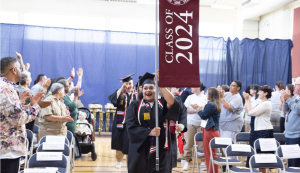
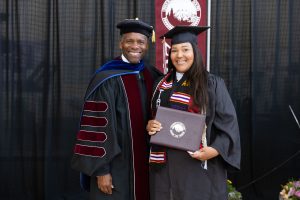
In June 2024, FEPPS celebrated its first commencement ceremony honoring the 10 women who earned their bachelor’s degrees. The ceremony was held inside the walls of the WCCW.
Prof. Erzen praised the graduates for their perseverance.
“You have practiced care, community, and a commitment to intellectual inquiry,” she said during the ceremony. “You are remaking the world, moving out of the darkness toward the future you want.”
FEPPS’s innovative model, which includes a student advisory council and leadership by formerly incarcerated individuals, sets a precedent for other prison education programs. The program’s structure and assessment-driven improvements provide a blueprint for delivering higher education in correctional settings, showcasing how education can drive meaningful change and reduce systemic inequities.
By providing incarcerated individuals with access to rigorous academic programs and comprehensive support, FEPPS not only transforms lives but also challenges societal perceptions of justice and redemption. As the program continues to grow, it remains a beacon of hope and opportunity for students, their families, and their communities.
For more information about FEPPS, visit pugetsound.edu/FEPPS.